
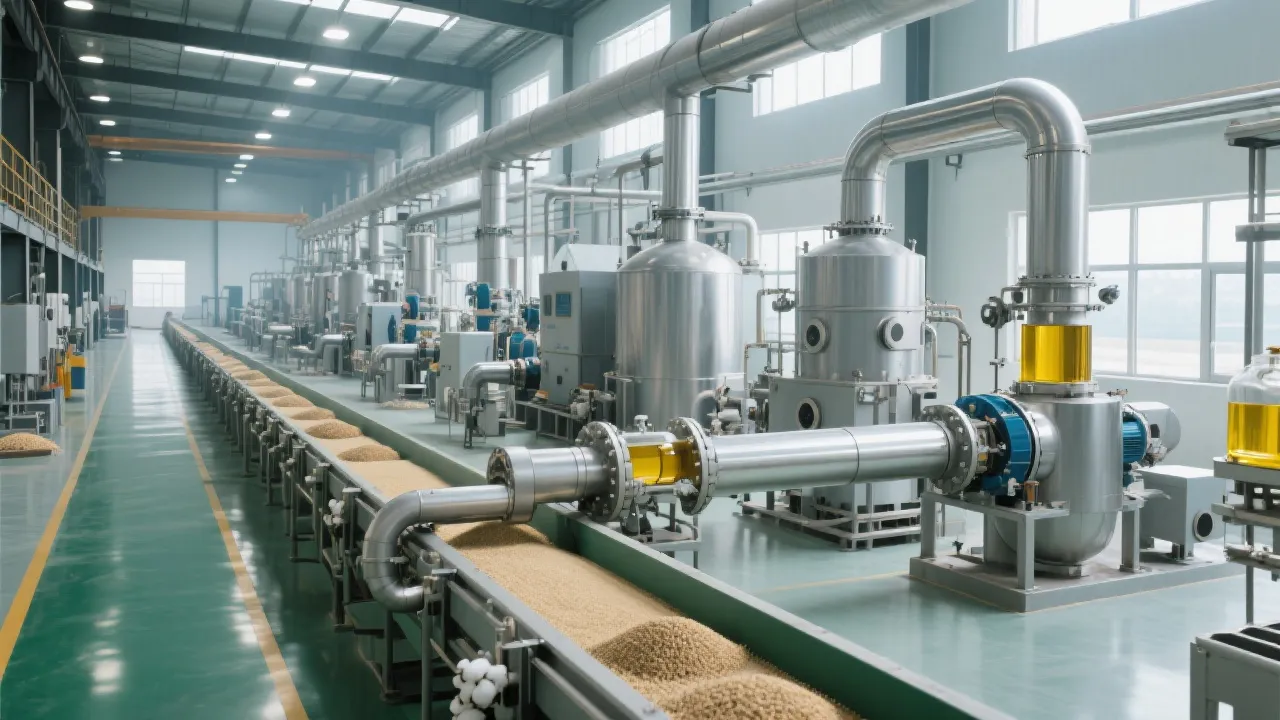
In industrial sunflower oil processing, selecting the correct filtration equipment is not just about efficiency—it’s about consistency, purity, and long-term operational stability. Whether you're running a small-scale edible oil plant or a high-volume cosmetics-grade refining facility, matching your filtration system to your production capacity ensures optimal performance and minimizes downtime.
Tar compounds in crude sunflower oil can compromise product quality and cause mechanical issues downstream. Studies show that untreated tar levels above 50 ppm significantly reduce shelf life and increase filter clogging frequency by up to 40%. For processors producing over 5 tons/day, choosing between activated carbon adsorption, vacuum degassing, and multi-stage membrane filtration becomes essential—not optional.
Key Factors Influencing Selection:
| Production Capacity | Recommended Filtration Method | Expected Maintenance Interval |
|---|---|---|
| Up to 1 ton/hour | Manual plate-and-frame filter press | Every 7–10 days |
| 1–3 tons/hour | Semi-auto pressure filter + activated carbon bed | Every 3–5 days |
| Over 3 tons/hour | Fully automatic continuous filter + vacuum deodorizer | Every 1–2 days |
Proper maintenance isn’t reactive—it’s preventive. According to a 2023 survey of 120 global edible oil producers, companies implementing scheduled cleaning cycles saw a 30% reduction in unplanned stoppages. Key practices include:
For users seeking hands-on guidance, our free downloadable maintenance checklist includes step-by-step visuals and real-world case studies from clients in India, Brazil, and Egypt—proven strategies used across diverse climates and regulatory environments.
From cosmetic manufacturers needing ultra-pure oils (below 10 ppm tar) to food processors aiming for clear, odorless finished products, the same core principles apply—but execution must be tailored. One client in Turkey increased throughput by 22% after switching from batch to continuous filtration; another in South Africa reduced waste by 18% through better media selection.
If you’re evaluating equipment for your next project—or optimizing an existing setup—consider how each technology aligns with your output goals, process complexity, and long-term sustainability. The right choice today can save time, money, and reputational risk tomorrow.
We’ve helped over 300 factories worldwide choose the ideal filtration solution—from pilot plants to full-scale refineries. Let us help you match your specific needs with proven technology.
Get Your Customized Equipment Recommendation 358
|
358
|
 Household oil press
Sunflower seed oil extraction
Oil yield improvement
Pressing oil equipment maintenance
Raw material pre - treatment
349
|
Household oil press low oil yield reasons
Sunflower oil extraction efficiency improvement
Oil press daily maintenance guide
Household grain and oil processing skills
Oil press fault troubleshooting methods
375
|
sunflower oil extractor
small - scale grain and oil processing
high - oil - yield equipment
low - energy - consumption oil press
compact pressing equipment
115
|
Mechanical pressing of sunflower oil
Small - scale oil processing
Cold and hot pressing processes
Home oil pressing equipment
Oil extraction technology
74
|
sunflower seed oil press
home oil press machine
commercial oil expeller
small farm oil extraction
oil press comparison guide
Household oil press
Sunflower seed oil extraction
Oil yield improvement
Pressing oil equipment maintenance
Raw material pre - treatment
349
|
Household oil press low oil yield reasons
Sunflower oil extraction efficiency improvement
Oil press daily maintenance guide
Household grain and oil processing skills
Oil press fault troubleshooting methods
375
|
sunflower oil extractor
small - scale grain and oil processing
high - oil - yield equipment
low - energy - consumption oil press
compact pressing equipment
115
|
Mechanical pressing of sunflower oil
Small - scale oil processing
Cold and hot pressing processes
Home oil pressing equipment
Oil extraction technology
74
|
sunflower seed oil press
home oil press machine
commercial oil expeller
small farm oil extraction
oil press comparison guide








.png?x-oss-process=image/resize,h_100,m_lfit/format,webp)
.png?x-oss-process=image/resize,h_100,m_lfit/format,webp)
.png?x-oss-process=image/resize,h_100,m_lfit/format,webp)

.jpg?x-oss-process=image/resize,h_800,m_lfit/format,webp)


.jpg?x-oss-process=image/resize,h_800,m_lfit/format,webp)