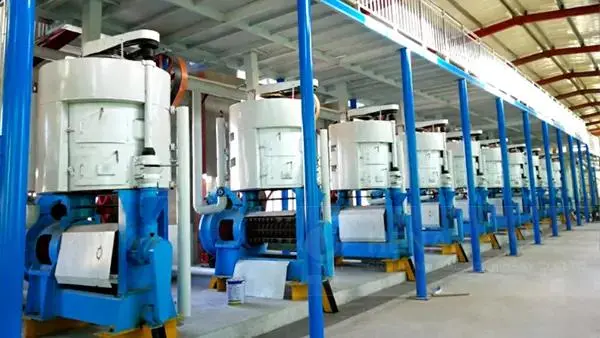
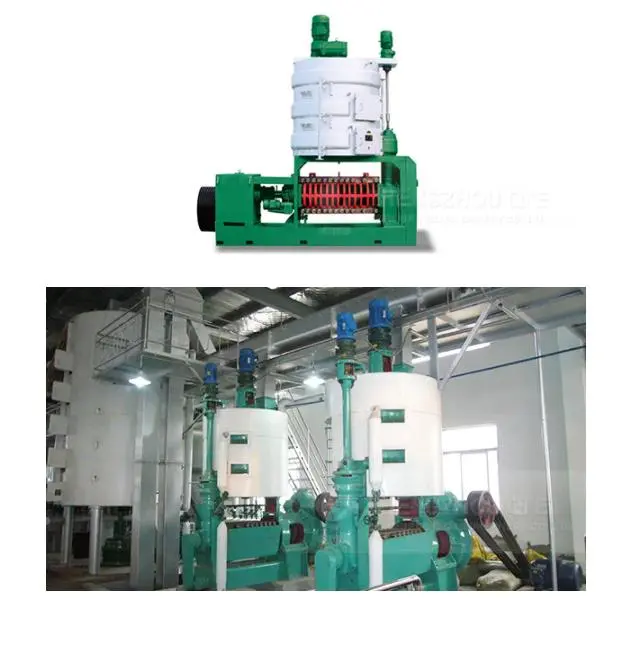
In the realm of small - scale oil and grain processing, particularly in small workshops, two prominent pain points often emerge: unstable production volume and difficulty in ensuring product quality. Small - scale workshops, such as those producing sunflower oil, frequently struggle to maintain a consistent output while also delivering high - quality products. This is where the flexibility of equipment comes into play as a core solution.
Compact equipment offers several advantages in small - scale oil and grain processing. In terms of space utilization, these machines are designed to fit into limited workshop areas. For example, a small - scale sunflower oil press can occupy as little as 2 - 3 square meters, making it ideal for home - based or micro - processing scenarios. Operationally, they are user - friendly, often requiring only one or two operators to manage the entire process. This simplicity reduces labor costs and the potential for human error. Moreover, they are highly adaptable to different processing techniques, including both cold and hot pressing, which is crucial for achieving different product qualities.
Controlling raw material batches is essential for maintaining product quality. By ensuring that each batch of sunflower seeds is of consistent quality, processors can better manage the entire production process. For instance, a batch size of 50 - 100 kg can be easily managed in a small - scale setting. This allows for more precise control over the moisture content, purity, and other factors that affect the final product.
When it comes to pressing, the choice between cold and hot pressing is a critical decision. Cold pressing, typically carried out at temperatures below 60°C, helps to preserve the natural flavor and nutritional value of the oil. However, it may result in lower yields. Hot pressing, on the other hand, can increase the extraction rate but may impact the oil's flavor. By setting the appropriate pressing parameters, such as temperature and pressure, processors can strike a balance between yield and quality.
Optimizing the pressing cycle can significantly improve production efficiency. By reducing the time between batches and minimizing the amount of oil left in the residue, processors can increase overall yields. For example, through proper cycle optimization, it is possible to reduce oil loss from the residue from 8% to 5%, which translates to a significant increase in production volume over time.
Let's look at a real - world example. A small - scale sunflower oil processing workshop in Eastern Europe implemented a standardized production process. By strictly controlling raw material batches, optimizing pressing parameters, and managing the pressing cycle, they were able to increase their daily production by 20% while maintaining a high - quality product with consistent flavor. The use of a standardized process also reduced the variability in product quality, with the flavor consistency rate increasing from 80% to 95%.
To enhance the practicality of the process, a simple visual flowchart or an operation checklist can be provided. This helps users to follow the steps more easily and ensures that no critical steps are missed. For example, a flowchart can clearly show the sequence of raw material input, pressing, and oil collection, while a checklist can remind operators to check key parameters at each stage.
To build a content community ecosystem, a common questions and answers section or an experience - sharing area can be set up. This allows users to interact, share their experiences, and get answers to their questions. For example, users can ask about specific problems they encounter during the production process, and others can share their solutions.
Explore Penguin Group's Compact Oil Presses for High - yield and Stable - quality Production
 83
|
83
|
 Small-scale sunflower oil equipment
Mechanical pressing technology
Efficient and stable operation
Household oil extractor
Sunflower oil production process
371
|
home sunflower oil press
compact oil extraction machine
cold press sunflower oil
small batch oil production
family food processing
405
|
small-scale sunflower seed oil press
home-use sunflower oil machine
commercial sunflower oil press
sunflower seed oil machine buying guide
oil yield improvement techniques
495
|
Sunflower seed oil yield improvement techniques
Household oil press usage guide
How to increase oil yield of small oil presses
Mechanical pressing vs chemical extraction
Household grain and oil processing practices
74
|
sunflower seed oil press
home oil press machine
commercial oil expeller
small farm oil extraction
oil press comparison guide
Small-scale sunflower oil equipment
Mechanical pressing technology
Efficient and stable operation
Household oil extractor
Sunflower oil production process
371
|
home sunflower oil press
compact oil extraction machine
cold press sunflower oil
small batch oil production
family food processing
405
|
small-scale sunflower seed oil press
home-use sunflower oil machine
commercial sunflower oil press
sunflower seed oil machine buying guide
oil yield improvement techniques
495
|
Sunflower seed oil yield improvement techniques
Household oil press usage guide
How to increase oil yield of small oil presses
Mechanical pressing vs chemical extraction
Household grain and oil processing practices
74
|
sunflower seed oil press
home oil press machine
commercial oil expeller
small farm oil extraction
oil press comparison guide







.png?x-oss-process=image/resize,h_100,m_lfit/format,webp)
.png?x-oss-process=image/resize,h_100,m_lfit/format,webp)
.png?x-oss-process=image/resize,h_100,m_lfit/format,webp)

.jpg?x-oss-process=image/resize,h_800,m_lfit/format,webp)